Doberman owners • Clinical record audit

Pet Insurance for a Doberman: separate breed risk from claim eligibility

Start with the pre-existing-condition definition and your Doberman’s veterinary notes. Breed relevance is a reason to ask better questions, not a coverage verdict.

Policy-first Independent Useful checks
Key checks

What matters on this page

Use these checkpoints to frame the literal question before reading the full guide.

Doberman-specific Cardiac questions deserve a clear record Breed context
Two decisions Enrollment and a covered claim are different Eligibility
Test purpose Screening and diagnostic work may be treated differently Expense audit
Direct answer

For a Doberman, check illness coverage, hereditary-condition language, the timing of symptoms and whether tests are preventive or diagnostic. Cornell identifies Doberman Pinschers among breeds predisposed to dilated cardiomyopathy, but that does not predict your dog’s outcome or establish insurance eligibility. Only the insurer’s applicable documents and underwriting can establish the offer.

The sections below show how to verify the answer and what can change it.

Read the history clause before comparing a premium

Put the policy’s pre-existing-condition definition beside your Doberman’s consultation notes, test reports and referral letters. Look for the date of the first relevant sign, the date advice was given, the date treatment began and the insurance effective date. A policy decision may depend on documented symptoms before a formal diagnosis. Do not edit or omit older notes because a later test clarified the cause.

As a concrete document example, the Pets Best Alabama specimen, section 5.A.1, considers prior veterinary advice, treatment and verifiable related symptoms. That is an Alabama contract illustration, not a national rule or a Doberman-specific acceptance promise. Ask the insurer which form and state amendments would apply to your dog. The official Embrace terms page also expressly separates sample wording from eligibility established through underwriting.

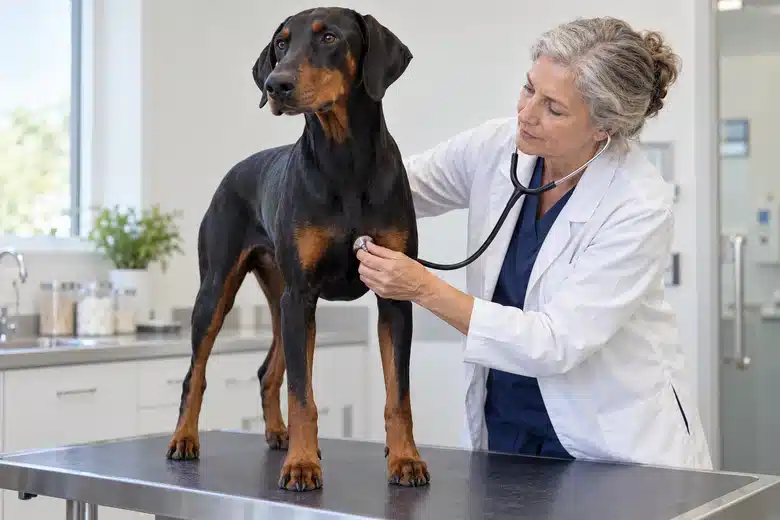
Illustrative scene: Doberman receiving a veterinary chest examination
AI-generated editorial illustration; not a real clinic, customer testimonial or verified location.

Turn Doberman health relevance into precise insurance questions

Cornell describes dilated cardiomyopathy as heart-muscle disease and includes Doberman Pinschers among predisposed breeds. Early disease may lack obvious signs, and veterinarians may recommend screening in predisposed dogs. Diagnostic assessment can include echocardiography, ECG and Holter monitoring. Which tests your own dog needs is a veterinary decision; a breed risk alone does not establish disease.

Evidence matrix

Clinical reason, contract question, quote implication

Issue to verify Clinical evidence Policy clause to locate Why the quote can mislead
Breed predisposition Cornell identifies Dobermans as predisposed to DCM Hereditary/congenital terms and illness definitions Breed accepted at enrollment does not mean every later condition is eligible
Screening without symptoms Cornell discusses screening of predisposed breeds Preventive care and diagnostics exclusions A wellness allowance is not the same as illness benefits
Investigation of a clinical concern Cornell lists cardiac diagnostic tools Eligible veterinary expense and pre-existing definition The reason for a test matters alongside its name
Continuing eligible care Ask the veterinarian what follow-up is anticipated Annual limits, renewal terms, medication benefits A low first premium does not describe repeat out-of-pocket expense

Breed predisposition

Clinical evidence Cornell identifies Dobermans as predisposed to DCM
Policy clause to locate Hereditary/congenital terms and illness definitions
Why the quote can mislead Breed accepted at enrollment does not mean every later condition is eligible

Screening without symptoms

Clinical evidence Cornell discusses screening of predisposed breeds
Policy clause to locate Preventive care and diagnostics exclusions
Why the quote can mislead A wellness allowance is not the same as illness benefits

Investigation of a clinical concern

Clinical evidence Cornell lists cardiac diagnostic tools
Policy clause to locate Eligible veterinary expense and pre-existing definition
Why the quote can mislead The reason for a test matters alongside its name

Continuing eligible care

Clinical evidence Ask the veterinarian what follow-up is anticipated
Policy clause to locate Annual limits, renewal terms, medication benefits
Why the quote can mislead A low first premium does not describe repeat out-of-pocket expense
Compare with the details in front of you

Ready to check current rates?

Keep policy terms, deductible, reimbursement and limits beside the quote so the comparison stays consistent.

Find Coverage for Your Pet

Audit the estimate line by line

Ask for an itemized estimate rather than a single “heart check” amount. Keep the consultation, monitoring, imaging, interpretation and any medication separate. Then mark each line as confirmed eligible, excluded, dependent on an optional benefit, or still unanswered. Do not treat a veterinarian’s recommendation as insurance approval. Equally, do not delay indicated care simply to try to get beyond an insurance waiting period.

In the reviewed Alabama sample, office visits, take-home drugs and rehabilitation sit within specified supplemental-benefit provisions, while preventive care and claims for a healthy pet with no clinical symptoms appear in exclusions. That combination shows why a list of covered illnesses is insufficient: the selected benefits and the purpose of each expense also matter. These clauses must be rechecked against the actual state form and declarations.

Make the comparison about this Doberman

Checklist

Keep these inputs constant

Use the same Doberman breed designation, birth date or documented age estimate, sex, home ZIP and requested effective date.
Record whether accident-and-illness coverage, rather than accident-only coverage, is being quoted.
Match the annual benefit, reimbursement percentage, deductible structure and optional benefits.
Disclose the same medical history to each insurer and retain written responses.
Keep liability insurance questions separate: this guide concerns the Doberman’s veterinary expenses.

A useful quote comparison has two columns that are often missing: what the insurer still needs to decide, and what the owner must pay regardless of approval. Unresolved history questions belong in the first column. Premiums, excluded screening and any deductible or coinsurance belong in the second. Avoid assigning a dollar saving until you have actual quotes for this dog; no comparable Doberman premium sample was obtained for this article.

A practical decision point

If the main reason for buying is a condition already under investigation, ask for a written explanation of how the history definition applies before relying on future reimbursement. You can still evaluate protection for other eligible future events, but that is a separate value judgment. A veterinarian should guide clinical care; an insurer should explain the contract.

FAQ

Common questions

Does a Doberman’s breed automatically make heart disease pre-existing?

Breed predisposition and an individual medical history are different. Read the contract definition and have the insurer assess the records; do not infer an exclusion or coverage from breed alone.

Are cardiac screening tests covered?

Not necessarily. Ask whether the specific test is preventive screening or investigation of a covered concern, and which selected benefit would pay it.

Sources & editorial standards

Independent references

These links provide independent government, academic or reference background. Actual policy wording controls insurance eligibility, benefits and claims.

Pet Insurance Lens

Ready to compare with clearer inputs?

Keep the policy terms beside the price, then continue to rates when the comparison is clear.

See Insurance Rates